Affiliate disclosure: Some links in this guide are affiliate links. If you buy through them we earn a small commission at no extra cost to you. We only recommend products we have personally tested or thoroughly researched.
A friend of mine turned 47 last year and bought a smart ring after reading several enthusiastic reviews. Within three weeks she had stopped wearing it. Not because it was uncomfortable, but because every morning she would check her readiness score, see a 62, and spend the first hour of the day convinced she was either ill, overtrained, or about to have a heart attack. None of those things were true. She just had a number and no framework for what to do with it.
This guide is for her and for everyone else who wants to use AI and data to understand their health better after 40, without the anxiety that comes from treating a consumer wearable as a medical device. The goal is not a perfect score. The goal is a clearer picture of your own patterns, week over week, so that when something changes you notice it, and when everything is fine you stop worrying. The Sunday check-in at the end of this guide is the most useful thing you will find in any AI health tracking article. It takes five minutes and requires nothing you do not already own.
Track four things: sleep consistency, resting heart rate trend, subjective energy, and one lifestyle variable you are trying to change. Once a week, paste your notes into a free AI and ask for patterns. No wearable required for any of this. If you have a wearable, use it for trends over weeks, not for daily scores. Never let a number override how you actually feel.
What to Actually Track After 40
The most common mistake in health tracking is tracking too many things. You end up with a dashboard full of numbers, no sense of which ones matter, and a vague background anxiety that replaces the vague background uncertainty you started with. After 40, the useful metrics are fewer than you think, and the most useful one is not on any wearable.
The four things worth tracking are: how consistently you are sleeping (not how long, but whether the timing is similar from day to day), your resting heart rate trend over several weeks (not today’s number, but whether it is broadly stable or drifting), how your energy and mood compare to your personal normal (which only you can assess), and one specific thing you are trying to change. That last one is the most important. Tracking six metrics gives you data. Tracking one behavioural change gives you feedback.
Sleep consistency matters more than sleep duration for most people in their 40s and 50s. Waking at roughly the same time each day, including weekends, has a stronger effect on how you feel during the week than whether you hit eight hours. Your phone’s Health app or Google Fit can tell you your average wake time and bedtime over the past month without any wearable. Check it once a week. If there is more than a 90-minute variance in your wake time across the week, that is the first thing to address. The science behind this is covered in our sleep optimization guide.
Resting heart rate is meaningful over time, not day by day. A resting heart rate that rises by five or more beats per minute over two or three weeks and stays there is worth noting and mentioning to a GP. A resting heart rate that varies by two or three beats from Tuesday to Wednesday is normal physiology. The mistake is checking daily and treating normal variation as a signal. Check monthly. Look at the trend, not the number.
The No-Wearables Version
You do not need a smart ring, a fitness band, or any new app to do meaningful health tracking. Your phone already captures sleep data using its motion sensor. A simple note taken each morning takes thirty seconds and provides the subjective layer that no sensor can capture. Once a week, you review both. That is the complete system. It works before you buy anything and continues working whether or not you ever add hardware.
The morning note is the most important part of this system and the most ignored. It is one sentence, written or typed immediately after waking, before you check anything else. “Slept well, woke once, energy feels 7/10.” That is it. After two weeks, those notes contain more genuinely useful information about your health than most wearable sleep scores, because they capture how you actually felt rather than what your movement patterns inferred.
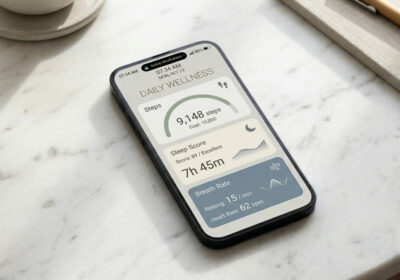
Your phone’s Health app (iPhone) or Google Fit (Android) is pre-installed and requires no setup. Open it once and check the Sleep section. You may already have weeks or months of data you have never looked at. The step count section shows activity trends. Neither is clinically precise, but both surface patterns over time. Use them as a starting point, not a verdict. Our zero-subscription wellness guide covers how to use these free tools more fully alongside a free AI tool.
Write one sentence each morning for two weeks before deciding whether to buy any health tracking hardware. The sentence covers: sleep quality (good, okay, poor), energy level (1-10), and one observation. “Slept well, woke early, energy 6, slight headache.” After 14 days, take those notes to the Sunday AI check-in below. The patterns that emerge from two weeks of honest one-sentence notes will tell you more than any single day of wearable data.
Sunday AI Check-In Template: one-page printable with the morning note format, weekly AI prompt, and three questions to ask when a number surprises you. Join the SAL newsletter and we will send it straight to your inbox.
The Sunday AI Check-In
Once a week, take five minutes and paste your week’s health notes into a free AI tool. Ask it to find patterns and suggest one thing to try next week. This is not medical advice and should not be treated as such. It is pattern recognition applied to your personal data, done in plain English, with no dashboard and no score. It is the most useful thing in this guide and it requires nothing beyond a free account and a willingness to write one sentence a day.
The prompt that works: “Here are my notes from this week. Each entry has a date, my sleep quality, energy level, and any observations. Please write 2-3 sentences identifying any patterns you notice, and suggest one small, realistic change I could try next week.” Then paste seven days of notes. The AI will surface things you have already half-noticed but not articulated: the correlation between late meals and poor sleep, the mid-week energy dip that follows a particular pattern, the two days where everything felt better and what they had in common. The weekly check-in habit is the cornerstone of the Sunday AI reset routine, which structures the full 30-minute process across health, home, and priorities in one sitting.
Use ChatGPT free, Gemini free, or Claude free for this. All three handle this kind of pattern recognition well within their free tiers. The output is a 3-sentence summary and one suggestion. Read it, take what is useful, ignore the rest. Do not treat it as a diagnosis. Treat it as a thoughtful friend reading your diary and noticing something you missed.
| What to include | Example note | What the AI can find |
|---|---|---|
| Sleep quality | “Good / woke once at 3am” | Nights with broken sleep and what preceded them |
| Energy (1-10) | “6 . tired by 3pm” | Weekly pattern, which days are consistently lower |
| One observation | “Ate late, felt groggy all morning” | Correlations between habits and how you felt next day |
| What changed | “Went for a walk at lunch” | Whether the change you tried made any difference |
If You Have a Wearable: How to Read It Calmly
If you already own or decide to buy a wearable, the rule that prevents most of the anxiety is this: look at the weekly or monthly summary, not the daily score. A single day’s readiness score of 62 means almost nothing on its own. Three weeks of readiness scores where the weekly average is trending down by 8 points means you are accumulating fatigue and might want to take a quieter week. The trend is the data. The daily number is noise.
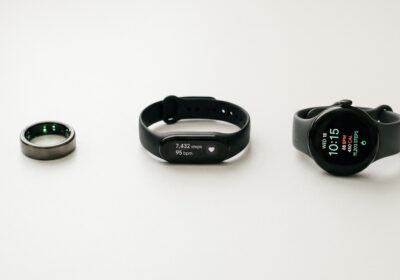
The two metrics from a wearable that are genuinely useful after 40 are resting heart rate trend and sleep consistency. HRV (heart rate variability) is useful once you have several months of baseline data and understand that your HRV is personal . comparing your number to published averages is not meaningful. Our smart wearables guide covers what each metric means and which devices measure them most reliably, including several options under £100 / $100 that do not require a monthly subscription.
When a number surprises you, the first question is: what else is different this week? Poor sleep score after a long flight, a bad night, a stressful day, alcohol, or illness is expected data, not alarming data. The number is telling you what your body already knows. If a metric is consistently unusual over three or four weeks without an obvious explanation, that is when the data earns a mention to your GP, as context for a conversation, not as a diagnosis.
What Not to Do
Checking the app before you get out of bed: This is the single habit most likely to turn useful data into anxiety. Your body knows whether you slept well before the app does. Check the app once a week during the Sunday review. Not every morning.
Comparing your numbers to published averages: Average resting heart rate for a 50-year-old woman means nothing for your specific body, your history, and your current circumstances. Your trend matters. Population averages do not.
Using AI to interpret a single alarming reading: If your ring or watch shows something that genuinely worries you . an irregular heartbeat pattern, a resting heart rate spike that persists . the right next step is your GP, not an AI prompt. AI is for pattern recognition across your normal data. It is not for interpreting potentially abnormal readings.
Tracking without a reason: Data without a question attached to it is just noise. Before you start tracking anything, write down one sentence: what do I actually want to know? “I want to understand why I am so tired on Thursdays” is a reason. “I want to optimise my health” is not . it is too broad to generate useful action.
Sunday AI Check-In Template: one-page printable with the morning note format, weekly AI prompt, and three questions to ask when a number surprises you. Join the SAL newsletter and we will send it straight to your inbox.
The light and temperature changes that have the strongest evidence for improving sleep quality are covered without any tracking hardware in our circadian lighting guide. Address the environment first. Then track whether it made a difference.
Some links in this guide are affiliate links. If you buy through them we earn a small commission at no extra cost to you. We only link to products we have personally tested or thoroughly researched.
Common Questions
What health metrics should someone over 40 actually track?
Four: sleep consistency (not duration), resting heart rate trend over weeks, subjective energy compared to your personal normal, and one behavioural variable you are trying to change. Everything else is optional. The most useful metric is the one you write down yourself each morning.
What is the Sunday AI check-in and how do I do it?
Once a week, paste your week’s morning notes into a free AI (ChatGPT, Gemini, or Claude . all free). Ask: “Here are my sleep and energy notes for the week. Write 2-3 sentences on any patterns you notice and suggest one small thing I could try next week.” Read the output. Take what is useful. It takes five minutes and requires no wearable or paid app.
Do I need a fitness tracker to use AI for health tracking?
No. The no-wearables version uses your phone’s built-in Health or Fit app for sleep and step data, plus a simple daily note for everything else. Feed both into the Sunday check-in. The phone data gives you numbers. Your notes give you context. Together they are more useful than most wearable data on its own.
When should I actually see a doctor instead of using AI?
When a metric is consistently unusual for three or more weeks without an obvious cause. When you notice a symptom . chest discomfort, breathlessness, persistent fatigue . that is not explained by lifestyle factors. When you are genuinely worried, not just anxious about a number. AI pattern recognition is useful for making sense of your normal data. It is not a substitute for clinical assessment when something feels wrong.


Leave a Reply