Affiliate disclosure: Some links in this guide are affiliate links. If you buy through them we earn a small commission at no extra cost to you. We only recommend products we have personally tested or thoroughly researched.
CES 2026 felt less like a gadget show and more like a preview of how homes will actually live and breathe in the next few years. Smart home tech moved beyond flashy voice commands and “wow” demos into practical, AI-driven automation that anticipates your routine, improves safety, cuts energy waste, and supports daily wellness. The big themes were smarter security, deeply integrated appliances, Matter-friendly ecosystems, robotic helpers, and wellness-driven spaces that feel more like a calm, responsive environment than a tech lab.
CES runs from 6 to 9 January every year in Las Vegas. This year drew over 4,000 exhibitors and a record number of Innovation Award submissions. What separated 2026 from recent shows was a shift in ambition: less “here is a new gadget” and more “here is how all of this works together.” The AI story moved from cloud-dependent features to on-device processing, from reactive responses to predictive routines, and from closed ecosystems to something approaching genuine interoperability. Not every claim will survive contact with reality, but the direction is clear.
CES 2026 smart home summary: UWB locks that know you are approaching, mmWave sensors that track posture without cameras, AI lighting that understands room geometry, local on-device AI that stops sending everything to the cloud, Matter 1.5 finally covering cameras and locks, LG and Samsung betting on robots for household labour, and Alexa+ becoming a proper agentic assistant. The theme across all of it: the home adjusting to you rather than you adjusting to it.
CES 2026: A Show About Living, Not Just Gadgets
The clearest signal at CES 2026 was the shift from individual products to integrated systems. Companies were not showing things you buy; they were showing things your home becomes. Samsung talked about AI companions, not appliances. LG’s theme was “zero labour.” Aqara showed a whole ecosystem of sensors, thermostats, cameras, and locks that understand each other. The gadget era of smart home is not over, but the serious money is moving toward orchestration.
The honest version of this is more nuanced. Engadget’s team noted that some press conferences had more AI buzzwords than concrete product announcements, with companies publishing press releases after the keynote quietly confirming what they had avoided saying out loud. The hype is real, and some of it will not survive contact with real homes. But the underlying trend, which is on-device AI processing, local automation, and cross-brand interoperability through Matter, is substantive and accelerating.
For renters and small-space owners specifically, CES 2026 was more relevant than usual. Smart locks reached a quality and renter-compatibility threshold worth paying attention to. Lighting AI matured past colour-changing gimmicks into genuine circadian and spatial intelligence. And the Matter standard finally brought cameras and locks into the interoperable ecosystem, which means fewer proprietary hub dependencies going forward. If you have been waiting for the smart home to “settle down,” 2026 is as close as it has come.
Samsung reported that SmartThings now serves more than 430 million users as of December 2025. LG, Amazon, Apple, and Google each run ecosystems at comparable scale. The reason interoperability matters is that at this user count, no single ecosystem wins outright. Matter is the standard that lets all of these coexist. When Samsung’s CEO describes the next era as “open collaboration, not closed ecosystems,” the market forces behind that statement are real.
AI-Driven Routines That Actually Work
The shift from rule-based automation to AI-driven prediction was the most consistent theme across CES 2026. The older model: you set a timer and a condition. The new model: the system observes your patterns, infers your preferences, and adjusts without you building explicit rules. The distinction matters because rule-based automation breaks the moment your life changes. Pattern-based AI adjusts when you do.
Amazon’s Alexa+ was the most consequential announcement for everyday users. The redesigned assistant moves from a reactive command-follower to an agentic model: it can take multi-step actions, maintain persistent context across conversations, manage calendars, control smart home devices, and handle requests that require several things happening in sequence. The web-accessible version at Alexa.com brings this to desktops and phones with the same persistent context available at home. Alexa+ Greetings combines conversational AI with Ring’s video feed to handle doorbell interactions intelligently, a small feature that removes a surprisingly large amount of daily friction.
Samsung’s Family Hub refrigerator integrated Google Gemini at CES 2026, making it the first home appliance to run a major large language model. In practice, this means conversational food management: the AI Vision system tracks what goes in and out of the fridge, the Gemini integration connects this inventory to recipe suggestions, and the whole thing talks to your Google Assistant routines. The kitchen becoming a node in your AI routine rather than a disconnected appliance is a meaningful shift, even if the specific product is currently outside most budgets.
Philips Hue’s AI assistant, updated at CES, now creates automations from natural language. You say “wake me up at 6:45 every day except Wednesdays” and the automation is built. This sounds trivial but represents a real improvement over menu-based automation builders, which are a significant barrier for anyone who does not enjoy configuring logic conditions. See our smart speakers guide for the broader voice assistant comparison and what each platform handles well.
The local processing story is the one worth watching most carefully for privacy-conscious users. Samsung’s EdgeAware AI Home system processes sound data locally, identifying 12 distinct sounds, including breaking glass, running water, and prolonged coughing, without sending audio to the cloud. Aqara’s new sensors run presence detection and person tracking on-device. The industry is moving away from “send everything to the cloud and process it there” toward on-device inference, which is better for privacy and faster for response times.
CES 2026 Smart Home Cheat Sheet: the five key announcements, what is available now versus later in 2026, and a Matter compatibility checklist. Join the SAL newsletter and we will send it straight to your inbox.
Smarter Security and Safety
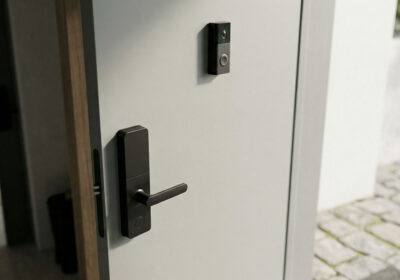
Smart locks at CES 2026 reached a level of quality and interoperability that makes them worth considering for the first time as a practical renter-compatible upgrade. UWB (Ultra Wideband) positioning became the headline technology, enabling locks that know both your distance and your angle of approach, unlocking the door before you touch the handle while not triggering when you walk past. Almost every lock announced was Matter-certified and compatible with all major platforms without a proprietary hub.
The Aqara Smart Lock U400 was the most significant security announcement for mainstream users. It uses UWB to pinpoint your location to within a centimetre, measuring both distance and angle of arrival so it can distinguish “walking toward the door” from “standing near the door” and from “passing by on the pavement.” It unlocks automatically via Apple Home Key on iPhone or Apple Watch, supports fingerprint, NFC, passcode, and mobile app as backups, and is Matter-certified over Thread. No proprietary hub required. It is already available in the US, Canada, Australia, New Zealand, and Singapore, with Samsung Wallet digital key support coming in Q1 2026.
Biometric authentication was the second major lock trend. Multiple manufacturers, including SwitchBot with its Lock Vision series, Xthings with the Ultraloq Bolt Sense, and Desloc with the S150 Max, showed 3D facial recognition and palm vein scanning. Palm vein scanning uses near-infrared light to read the unique vascular pattern of your hand, which works even with wet or dirty hands and is harder to spoof than fingerprint or standard face recognition. Several of these locks are priced below $300 and are Matter-compatible. The Ultraloq Bolt Sense specifically targets renter-appropriate installation.
On the sensor side, Aqara’s Spatial Multi-Sensor FP400 uses mmWave radar to track multiple people in a room simultaneously, detect posture (sitting, standing, lying down), and trigger automations based on real presence rather than motion. The distinction matters: a standard motion sensor stops detecting you the moment you sit still, triggering “no one home” automations while you are at your desk. The FP400 does not. It detects occupancy even when no movement is happening, which means your heating, lighting, and security automations behave correctly when you are working quietly. There are no cameras involved. The detection is entirely radar-based.
Ring’s expansion at CES introduced Ring Sensors on Amazon Sidewalk, a low-power networking layer that operates independently of your home Wi-Fi. The practical implication is security sensors that work even if your internet goes down, extend further than your home Wi-Fi range, and do not require a hub. For renters who cannot run Ethernet, Sidewalk-based sensors are a meaningful step up in reliability from Wi-Fi-only options.
| Product | Key tech | Matter | Available | Renter-friendly |
|---|---|---|---|---|
| Aqara U400 | UWB hands-free, Apple Home Key | Yes (Thread) | Now (US/AU/NZ/SG/CA) | Yes, deadbolt replacement |
| Ultraloq Bolt Sense | Palm vein, face recognition, 0.5s | Planned | 2026 | Yes, designed for this |
| Yale Linus L2 Lite | Matter over Thread, all platforms | Yes (Thread) | Now (UK £129.98) | Yes, retrofit deadbolt |
| Aqara FP400 | mmWave, multi-person, posture | Yes | TBC 2026 | Yes, no installation |
Appliances, Robots, and Back-of-House Automation
The robot story at CES 2026 was split between things that will ship in 2026 and things that will ship eventually. Samsung’s Bespoke AI robot vacuum and LG’s CLOiD humanoid robot are at opposite ends of that spectrum. The vacuum is available now and significantly more capable than its predecessors. CLOiD is a research direction, not a product. The appliance story, meanwhile, is more immediately actionable: AI-assisted cooking, smarter food management, and connected laundry moved from concept to catalogue.
LG unveiled CLOiD, its humanoid home robot designed to perform household tasks, including folding laundry, tidying, loading appliances, and navigating the home autonomously. It connects to LG’s ThinQ platform and is designed to be proactive and emotionally responsive. The framing was “zero labour home.” The honest framing is that CLOiD is a vision product: there is no consumer release date, no price, and the physical capabilities shown in demos remain challenging to replicate reliably in unstructured real homes. It is worth knowing about as a direction. It is not worth waiting for.
Samsung’s Bespoke AI Jet Bot Steam Ultra is a different story. The robot vacuum at CES runs on a Qualcomm Dragonwing processor, uses Active Stereo 3D sensing to detect liquids, including transparent ones, and doubles as a home monitoring device while you are away. The camera system can notify you about pets and flag unusual activity. A smarter Bixby integration means you can give it conversational instructions rather than working through a menu. This is shipping hardware at a real price point, not a concept.
The kitchen received the most attention of any room. Samsung’s Family Hub refrigerator with Google Gemini tracks inventory through cameras, suggests recipes based on what is actually in the fridge, and integrates with your calendar and shopping list. Michael Wolf, founder of The Spoon, described the connected kitchen at CES as “the area that will bring more benefit than any other,” specifically because connecting food inventory to water, heating, and purchasing networks creates a genuinely useful automation layer rather than a novelty.
The Bespoke AI Laundry Combo and AI AirDresser completed Samsung’s “zero housework” narrative. The laundry system manages wash and dry cycles based on fabric type and load, and the AirDresser steam-cleans garments without a full wash. Neither of these is a new product, but the AI coordination layer that lets them work together, and with the broader SmartThings ecosystem, is new in 2026.
For outdoor spaces, the Mammotion SPINO S1 Pro robotic pool cleaner won an Innovation Award for its automated shore landing and self-charging capability. It uses AI mapping, debris detection, and underwater communication to clean complex pool layouts without supervision. Battery-powered and zero-emission. Not relevant to most renters, but the same sensor maturity driving the pool robot is what is driving improvements in robot vacuums, lawn mowers, and eventually household assistants.
Matter, Interoperability, and Ecosystems
Matter 1.5, demonstrated across multiple booths at CES 2026, adds camera and smart lock support to the standard for the first time. This is significant because cameras and locks are the two device categories where proprietary ecosystems have been most persistent and most frustrating. A Matter-certified camera can now, in principle, work with Apple Home, Alexa, Google Home, SmartThings, and Home Assistant without brand-specific bridges. The Aliro digital key standard for locks moves in the same direction.
The practical state of Matter in January 2026 is more nuanced than the marketing suggests, but the direction is clear, and the momentum is real. Thread, the underlying mesh networking protocol that Matter relies on for its most capable implementations, made a strong showing. Multiple products at CES, including Aqara’s entire new lineup, used Matter over Thread rather than Matter over Wi-Fi, which means lower latency, better reliability, and mesh networking that does not depend on your home router being healthy.
The Aqara Thermostat Hub W200 is particularly notable for how it demonstrates mature Matter implementation. It acts as a Thread border router and Matter controller, supports Matter 1.5, connects to HVAC systems that most thermostats cannot, and integrates with Apple’s Adaptive Temperature and Clean Energy Guidance features from iOS 26. Adaptive Temperature uses iPhone location prediction to pre-adjust your home temperature before you arrive. Clean Energy Guidance makes small temperature adjustments when grid energy is cleaner and cheaper. Both features run through the Apple Home app with no additional setup once the W200 is paired.
Aqara’s Camera Hub G350, the company’s first Matter-certified camera, demonstrates what camera support in Matter 1.5 enables. It streams to Apple Home, Google Home, SmartThings, and Homey through a single device without brand-specific configuration. Athom, the maker of the Homey platform, announced at CES that it is working with Aqara, Ring, Google Nest, Reolink, and TP-Link to bring camera streams into Homey through Matter 1.5. The platform-agnostic camera is not quite here yet, but it is close enough to be a planning consideration now.
The Aliro digital key standard deserves a separate mention. Multiple locks at CES, including the Aqara U400 and several Xthings models, are described as “Aliro-ready.” Aliro is a cross-platform digital key standard designed to work across iPhone, Android, and other wallet platforms. When Aliro is fully implemented, you will be able to add a digital key to your Apple Wallet, Google Wallet, or Samsung Wallet and use it with any Aliro-certified lock regardless of ecosystem. The U400 adds Samsung Wallet support in Q1 2026. Full cross-platform Aliro is still in progress, but the lock hardware you buy now will be ready for it.
If you are new to smart home and trying to understand what platform to build on, see our beginner’s guide, which covers the ecosystem decision in plain terms. The short version after CES 2026: buy Matter-certified devices and Thread where possible, pick your primary voice assistant based on the phone you use, and do not buy anything that requires a proprietary hub if a Matter alternative exists at a similar price.
Energy, Sensors, and Smarter Environments
The energy and environment story at CES 2026 was about removing the cognitive overhead of managing your home’s resource use. Occupancy-based HVAC that does not waste energy in empty rooms. Lighting that adjusts to natural rhythms without daily scheduling. Energy monitoring that makes invisible waste visible. These are not flashy announcements, but they represent the most immediately actionable upgrades for renters and small-space owners.
Apple’s Clean Energy Guidance feature, integrated into the Aqara W200 thermostat, is worth understanding in detail. It connects to your electricity provider’s grid data, identifies periods when renewable energy generation is high and cost is low, and makes small temperature adjustments to take advantage of those windows. The adjustment is typically less than one degree and is designed to maintain comfort. For households on time-of-use tariffs, it can reduce the cost of heating and cooling without any manual input. This is the kind of automation that genuinely pays for itself. For the broader thermostat picture and energy savings estimates, see our energy tools guide.
Govee’s DaySync feature, launching April 2026 across new indoor products, automatically adjusts light colour temperature and brightness to match the local sun cycle throughout the day. This removes the need to set a manual schedule or remember to adjust lighting as the day progresses. The Govee Sky Ceiling Light, designed specifically for windowless rooms, uses a 5,200-lumen skylight-style gradient with CRI 95 colour accuracy to recreate daylight conditions in spaces that have none. At 6,500K with DaySync active, it provides a meaningful morning alertness signal in rooms where natural light is absent. See our circadian lighting guide for the science behind this and the specific devices worth buying for renters.
The Aqara FP400 presence sensor is relevant to energy as much as to security. A sensor that knows a room is occupied, and more specifically where in the room someone is and what they are doing, enables HVAC and lighting to operate only where needed rather than heating or lighting an entire home because the thermostat cannot distinguish “someone is in the living room” from “everyone has left.” mmWave presence sensing is the technology that makes zone-based occupancy automation reliable enough to trust with your thermostat.
Arqaios’ ALLIE system was one of the more interesting energy announcements for small spaces. It embeds AI and environmental sensors into standard fixtures, including light switches, outlets, and ceiling vents, using mmWave radar to detect occupancy and adjust lighting and airflow automatically. No cameras. No additional hardware visible. The system also detects falls, making it relevant for households with older residents. Pricing and UK/US availability are not yet confirmed, but the concept of building intelligence into existing fixtures rather than adding separate devices is the right direction for renters who cannot modify properties.
Wellness-First Home Tech
Wellness technology at CES 2026 divided into two camps: genuinely useful ambient health monitoring that runs in the background, and more speculative products in booths that may not ship. The ambient monitoring story is the one worth paying attention to. Sound detection for health events, air quality tied to cognition, and automated sensory environments are all moving from expensive edge cases into mainstream smart home platforms.
Samsung’s EdgeAware AI Home system processes sound locally without uploading to the cloud, detecting 12 distinct sounds, including breaking glass, running water, smoke alarms, and prolonged coughing. The coughing detection and wellness alert functionality is the most interesting for health applications: the system can surface a wellness check if a pattern suggests something unusual. There are obvious privacy questions about audio monitoring in a home, and Samsung’s local-processing architecture is a meaningful response to them. No audio leaves the device.
Govee’s Sky Ceiling Light is the most immediately actionable wellness product from CES for renters in low-light spaces. The Sky Ceiling Light focuses on comfort and wellbeing, using custom LEDs and a skylight-style gradient to create realistic blue-sky colours and sunset effects, particularly helpful in rooms without windows. It delivers up to 5,200 lumens with a CRI of 95 and uses DaySync to automatically mimic natural circadian lighting. For people in north-facing flats or basement rooms, this addresses a real problem rather than an aesthetic preference. The 6,500K maximum and high CRI are what matter for actual alertness and mood effects, not the colour show.
Deepscent AI brought scent into the ambient home, blending custom aromas based on mood, music, visuals, and environmental context using AI. The system integrates with smart home platforms and is trained on over 100,000 fragrance data points. The evidence base for scent as a meaningful wellness intervention is mixed, and this is squarely in the “interesting direction” category rather than “buy now.” It is worth watching for anyone interested in sensory environment design.
The broader wellness direction from CES 2026 connects directly to the sleep and sensory regulation work that SAL covers in detail elsewhere. The automated light schedule, consistent temperature management, and local air quality monitoring that make a home better for sleep are the same features that support daily cognitive function and sensory wellbeing. See our AI sleep optimization guide for the specific evidence and device recommendations behind each of these claims.
Humanoid robots for housework (LG CLOiD, others): These are research directions, not products. The capability demonstrations in controlled booth environments do not translate to reliable performance in real homes with variable layouts, objects, and conditions. The “zero labour home” framing is genuinely ambitious and genuinely years away from the product shelf.
AI features attached to things that do not need AI: Several products added “AI” to existing functionality without meaningful capability change. An AI-enabled kettle that suggests brew temperatures is an app with extra steps. Look for AI features that change what a device can do, not features that rename what it already did.
Products with no announced price or UK availability: CES regularly produces impressive hardware that ships only in the US, arrives at prices that make the use case unviable, or ships nine months later with reduced features. The table in the security section flags availability status for the most relevant devices. If a product has no price and no ship date, it is an intent, not a purchase.
What This Means for Your Home
The practical takeaways from CES 2026 depend on where you are in your smart home setup. If you are starting out, the advice is: buy Matter-certified devices and choose a primary ecosystem based on your phone. If you have an existing setup, the question is which CES announcements represent genuine upgrades worth buying into. The answer is mostly: smart locks and AI lighting are the two categories that moved meaningfully forward. Robots and advanced appliances are worth watching but not yet worth buying for most households.
For renters starting fresh
Start with Matter-certified devices and Thread, where available. The Aqara ecosystem demonstrated at CES 2026 shows what a coherent Thread-and-Matter setup looks like: devices from one brand that also work with every major platform, no proprietary hub, and automations that run locally. You do not need to buy Aqara specifically, but you do need to buy to the same standard. Check for Matter certification before any purchase in 2026.
A smart lock is now worth considering for renters who can replace a deadbolt. The Yale Linus L2 Lite is now available in the UK for £129.98. The Aqara U400 is available in the US and several other markets. Both are Matter-certified and work without proprietary hubs. The renter caveat: you need landlord permission to replace the lock, and you need to restore it on move-out. Both of these locks can be reversed in under ten minutes. Worth having the conversation.
For lighting, Govee’s DaySync (launching April 2026) and Philips Hue’s SpatialAware (spring 2026) represent the two most practically useful lighting advancements from CES. DaySync eliminates the need to manually schedule circadian lighting. SpatialAware makes multi-bulb scenes look like they were designed by someone who understood your room. Neither requires new hardware if you already have Govee or Hue bulbs.
For households with an existing setup
The CES 2026 upgrade worth prioritising is presence sensing. If your current setup uses motion sensors for occupancy automation (controlling heating, lighting, or security), upgrading to an mmWave presence sensor like the Aqara FP400 (when available) or its predecessor, the FP2 (available now), makes those automations significantly more reliable. Motion sensors fail when you are still. Presence sensors do not. This single upgrade improves every automation that depends on knowing whether someone is in a room.
The second worthwhile consideration is ecosystem consolidation. CES 2026 confirmed that Matter is the right abstraction layer for a mixed-brand setup. If you are currently running multiple proprietary bridges and hubs, the path to simplification is replacing them with Matter-compatible alternatives as they come up for renewal. Home Assistant remains the most capable self-hosted platform for complex setups, and its Matter support is maturing well. Gemini, Alexa+, and Google Home are all viable cloud-managed alternatives, depending on your phone and preference.
- Buy Matter-certified only: For any new device purchase in 2026, Matter certification should be a baseline requirement. If it is not listed, assume lock-in.
- Thread where possible: Matter over Thread is faster and more reliable than Matter over Wi-Fi. The Aqara and Eve ecosystems use Thread well. Apple TV 4K and HomePod mini are Thread border routers you may already own.
- Consider a smart lock: Yale Linus L2 Lite (UK now), Aqara U400 (US and others now) are the two renter-compatible options worth buying. Get landlord permission first.
- Upgrade presence sensing: The Aqara FP2 (available now) or FP400 (2026) are the best available mmWave presence sensors. One sensor per room where you have occupancy automations.
- Wait on Alexa+: Alexa+ is still rolling out. If you are deciding between Echo devices, buy the hardware now and the AI features will arrive as a software update.
- Skip the robots: Unless your budget and patience are both substantial, household robots are not a 2026 purchase. The robot vacuum category is mature and worth buying. The humanoid category is not.
The Aqara Thermostat Hub W200 is the most interesting single product from CES 2026 for renters. It combines a smart thermostat (HVAC-compatible, Apple Adaptive Temperature, Clean Energy Guidance), a Thread border router and Matter hub, a presence sensor (built-in mmWave), a 4-inch touchscreen panel, and a doorbell/lock integration panel into one device. If the price is competitive with standalone thermostats, it represents genuine reduction of device count while adding capability. Price has not been announced; shipping date is early 2026.
CES 2026 Smart Home Cheat Sheet: the five key announcements, what is available now versus later in 2026, and a Matter compatibility checklist. Join the SAL newsletter and we will send it straight to your inbox.
Some links in this guide are affiliate links. If you buy through them we earn a small commission at no extra cost to you. We only link to products we have personally tested or thoroughly researched.
Common Questions
What was the main smart home theme at CES 2026?
AI moving from a feature to infrastructure. Devices increasingly run AI locally on-device rather than in the cloud. The focus shifted from standalone gadgets to systems that observe your patterns and adjust the home environment without explicit rules. Interoperability through Matter also matured significantly, with cameras and locks joining the ecosystem properly for the first time.
Is the Aqara U400 smart lock available in the UK?
Not at the time of CES 2026 (January). It is available in the US, Canada, Australia, New Zealand, and Singapore. UK and European release dates have not been announced. The Yale Linus L2 Lite, which uses Matter over Thread and works with all major platforms, is available in the UK now at £129.98.
What is Philips Hue SpatialAware and do I need new hardware?
SpatialAware maps the physical position of every light in a room using your phone’s camera, then designs scenes that distribute light naturally across the space. You do not need new bulbs, but you do need a Hue Bridge Pro (the newer, faster hub). If you are on an older Hue Bridge, SpatialAware is not compatible. The feature launches spring 2026 and works with roughly half of the current Scene Gallery scenes at launch.
What is Alexa+ and when does it arrive?
Alexa+ is Amazon’s redesigned AI assistant built on an agentic model: it takes multi-step actions, maintains context across conversations, manages calendars and smart home devices, and handles complex requests. It is rolling out across existing Echo devices as a software update and is also accessible via the web at Alexa.com. No new hardware is required. The rollout is in progress as of January 2026.
Should I wait to buy smart home devices until Matter matures further?
Broadly, no. The right approach is to buy Matter-certified devices now, which will be forward-compatible as the standard matures, rather than waiting for a “finished” version that is always slightly ahead of you. Matter 1.5’s camera and lock support is new, but the core lighting and plug compatibility has been stable for two years. Thread-enabled devices are the more future-proof tier within Matter. The specific products worth buying now versus waiting for are covered in the section above.
What should renters specifically take from CES 2026?
Three things. First, any device you buy now should be Matter-certified. Second, smart locks have reached renter-compatible quality: the Yale L2 Lite (UK) and Aqara U400 (US/others) are both straightforward deadbolt replacements that need no hub. Third, AI lighting is maturing toward genuinely hands-off operation via Govee DaySync and Philips Hue SpatialAware. Robots and advanced appliances are worth watching but not yet worth buying for most renters in 2026.


Leave a Reply